How to Remove a White Background From an Image (Free Methods)
Table of Contents
To remove a white background from an image, you turn the white pixels into transparent ones and save the file as a PNG. How you do it depends on what the image is. A logo on pure white is a simple color job. A photo of a person or a product on white is not, because the subject usually contains white or near-white too, and "delete all the white" deletes part of the subject.
This guide shows which method fits which image, the steps, and how to fix the two usual problems: a white halo around the edge and white areas inside the subject that disappear.
Short on time? Upload the image to the Instasize background remover, check the edges, and download a transparent PNG.
If your goal is the opposite, putting a subject on a white background for a marketplace listing, use the marketplace white-background guide, or the white background maker for other photos.
Remove the white background, free in your browser
Try it freePick the right method for your image
| Your image | Best method |
|---|---|
| Photo of a person, pet or product | AI background remover |
| White product on white (white mug, shirt, box) | AI background remover, then check the edges |
| Logo or icon on flat white | Color-based or AI |
| Line drawing or signature | Color to alpha, or AI |
| Photo with a cluttered, multicolor background | AI background remover |
The split is simple. If the white is the same flat color everywhere and nothing in the subject is white, a color-based tool is enough. In every other case, use a method that finds the subject, not the color.
Remove it with an AI background remover
An AI background remover finds the subject and removes everything else, regardless of color. That is why it handles a white shirt on a white wall, which a color-based tool cannot.
- Open the Instasize background remover and upload your image.
- Wait for the cutout. The subject is separated from the white background.
- Zoom in on hair, fur, glass and thin edges in the preview.
- Choose Transparent, or pick another color if you want to replace the white instead.
- Download the result as a PNG.
If you only need a clean transparent file and nothing else, the transparent PNG maker goes straight to that output. Background removal is an AI feature and is part of the paid plans. Pro starts with a free trial, and downloads have no watermark.
Product photos: the white-on-white case
Sellers hit this constantly. A white ceramic mug, a white sneaker or a white box shot on a white sweep has almost the same color as its background, so there is nothing for a color tool to grab.

A subject-based remover keeps the white of the product and removes the backdrop. This is the same mug cut out and placed on a blue background. The white body and rim stay intact, and the edge stays crisp.

Tips that make product cutouts cleaner:
- Shoot the product with a little contrast against the backdrop. A light grey sweep or a slight shadow under the product helps. See the backdrop guide and product photography lighting.
- Keep the product's edges sharp. A blurry edge cannot be cut cleanly.
- Check the bottom edge, where the product meets its shadow. Add a new soft shadow afterward if it looks like it floats. The product photo shadow guide shows how.
- Do the same thing for a whole catalog with the batch editor.
If the cutout is headed for a marketplace, you will usually put it back on white. Amazon and eBay both want white backgrounds for main images, and the white background guide covers the rules and sizes. For a full upload workflow see the product photo editor.
Logos, icons and line art
Flat artwork is the easy case, because the white is a single uniform color and nothing in the artwork is white.
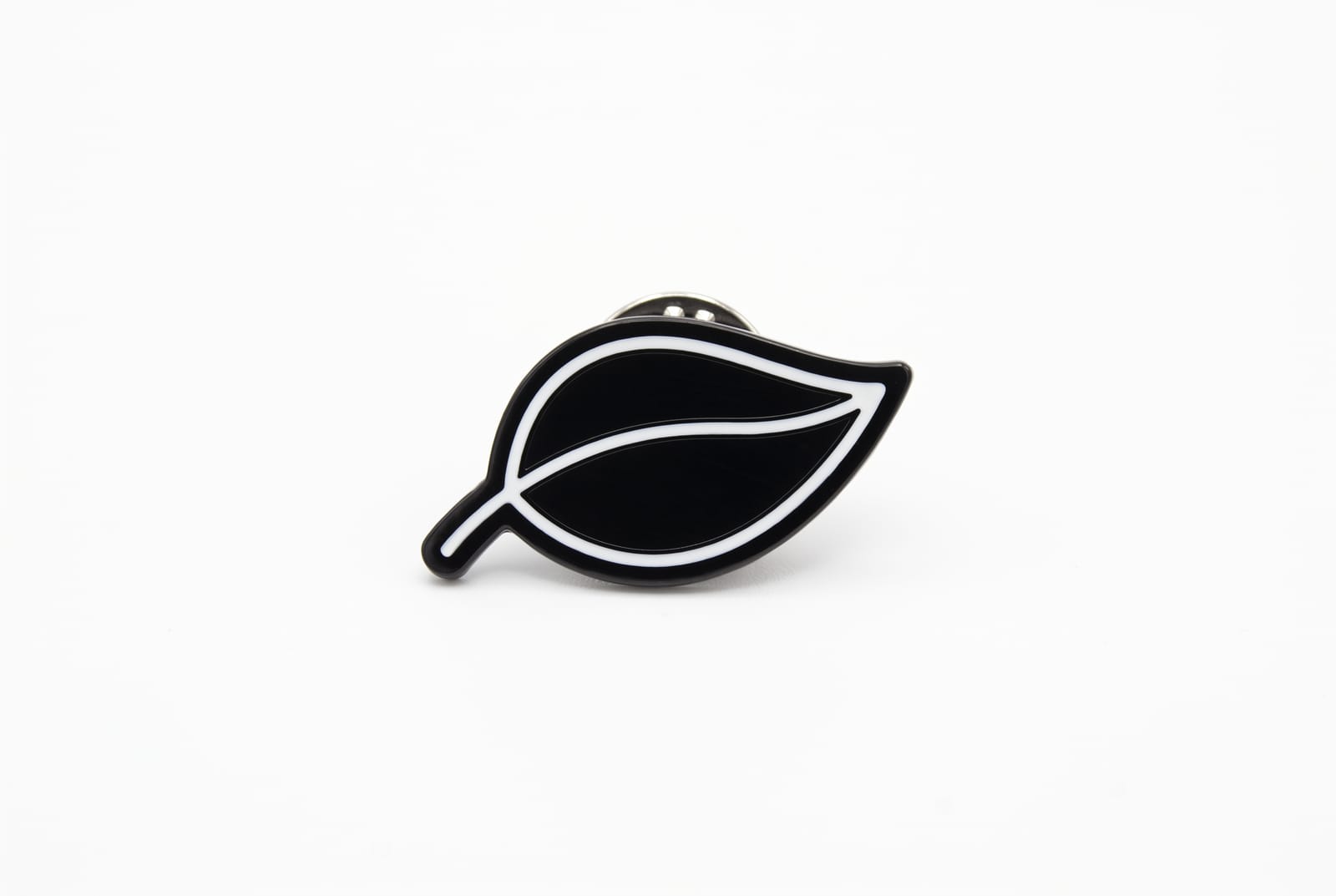
Watch for white that belongs to the design, like the thin white border inside this leaf. A color-based tool would delete it along with the background, so for artwork with white details use an AI remover or a color-based tool with the tolerance set low and only the outer area selected. For brand files and vector work, see removing a white background from a logo.
Color-based removal: when it works and when it does not
Color-based methods delete every pixel within a tolerance of white. They are fast and free in most editors, and they work well on:
- logos, icons and line art on a flat white canvas
- signatures and scanned handwriting
- diagrams and screenshots with a plain background
They fail on photos for two reasons. First, white inside the subject, such as a white shirt, a label, a tooth, or a highlight, is removed along with the background. Second, soft edges and shadows are partly white, so you get a ragged edge or a white halo.
Common color-based tools:
- Photoshop: the Magic Wand and Color Range remove white, and Remove Background and Select Subject find the subject. Our Photoshop walkthrough covers all four with steps. For vector artwork, see removing a white background in Illustrator.
- GIMP: Colors > Color to Alpha, choose white. Good for line art.
- Any editor with a magic wand or "remove color" tool: the same idea. Set a low tolerance, erase, and check the edge on a dark background.
Why you still see white after removing it
- You saved a JPG. JPG has no transparency, so empty areas are filled with white again. Save as PNG. The transparent PNG maker exports the right format.
- Your viewer shows white. Some apps render transparency as white. Place the file over a colored layer to check.
- Halo pixels remain. Light edge pixels were blended with the old background. Shrink the selection by a pixel or two, or use a higher-resolution source.
- White areas of the subject are missing. A color-based tool removed them. Redo it with a subject-based method.
Tips for cleaner edges
- Start from the highest-resolution file you have. Compression artifacts around the subject become halos.
- Check the result on a dark background, not a white one, so leftover fringe is visible.
- Photograph the subject with some contrast against its backdrop where you can.
- Keep a copy of the original. A transparent PNG cannot be turned back into the source photo.
- If you only need the opposite, a clean white backdrop, you do not need to cut anything out. Use a white background maker.
Frequently asked questions
How do I remove a white background from an image?
Upload the image to a background remover, let it cut out the subject, check the edges, and download the result as a PNG. PNG keeps the transparent pixels where the white background used to be.
Why does my image still have a white box after I remove the background?
The file was probably saved as a JPG, which cannot store transparency and fills empty areas with white. Export as PNG (or WebP) instead. Some apps also show transparency as white until you place the image over another color.
How do I keep white parts of the subject, like a white shirt or label?
Use an AI background remover that detects the subject instead of a color-based tool. Color-based removal deletes every near-white pixel, including white inside the subject. If you must use a color-based method, lower the tolerance and work only on pixels connected to the outer edge.
How do I get rid of the white halo around the edge?
The halo is leftover light pixels blended into the edge. Try a higher-resolution source, shrink or feather the selection by a pixel or two, or place the cutout on a background close to the original edge color. Starting from a sharp photo where the subject contrasts with its surroundings avoids most halos.
Can I remove a white background from a logo or signature?
Yes. Flat artwork like logos, line drawings and signatures is the easiest case because the white is uniform. Export a transparent PNG, and use the dedicated logo guide for vector and brand-file tips.
What is the difference between removing and making a white background?
Removing a white background leaves transparent pixels, saved as a PNG. Making a white background does the reverse: it replaces whatever is behind the subject with solid white, saved as a JPG, which is what marketplaces like Amazon ask for on main product images.
Is removing a white background free?
Instasize's editing tools are free. Background removal is an AI feature, part of the paid plans, and Pro starts with a free trial. Downloads have no watermark.